
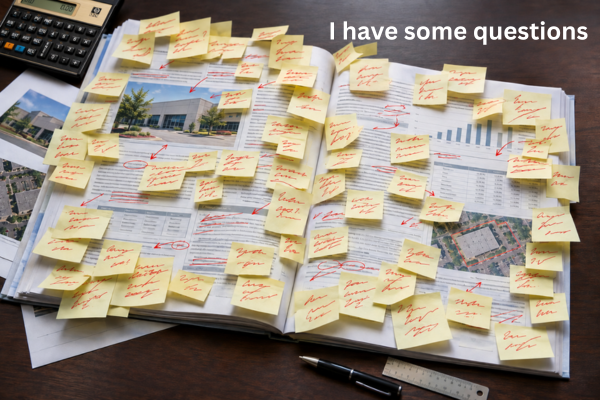
An email from a reviewer usually spikes appraisers’ blood pressure.
Here are the five stages that follow.
Denial: “Who is this joker?”
Anger: “Did they even read the report?”
Bargaining: “Maybe one extra sentence makes this go away.”
Depression: “What did I miss?”
Acceptance: “Fine. I will look at it.”
Funny because it’s true.
Appraisers are analytical, hardworking often sensitive people. They care about getting it right. Which also means they can take a reviewer’s question personally.
But that email may be the most valuable interruption of the week. It’s a detour.
Experience doesn’t grant permission to stop learning. Treating every reviewer comment as an insult is unproductive.
Sometimes, it exposes things you overlooked because you were in a hurry to meet a due date. Missing explanations. Untethered logic. Boilerplate from 2007. A client requirement buried in an 11-page engagement letter.
The wrong response is writing defensive reports designed to avoid questions. If every property is in average condition, free of deferred maintenance and magically stabilized, your report may attract fewer comments. It has also failed the client.
Nor should you just roll over.
Reviewers can be wrong. The worst reviews are copy-and-paste AI slop: 39 comments, little judgment and no distinction between material valuation issue and the inconsequential. That wastes time and insults the appraiser’s work.
Challenge weak feedback. Defend sound analysis. The best appraisers do both.
They defend good work.
They fix weak work.
They stay curious.
Because every unnecessary exchange slows the everyone’s SLA.
Before you fire back, ask one question:
What is this asking me to improve, clarify, or do next?
You may still disagree.
Do the work before you decide.
Trust the detour.